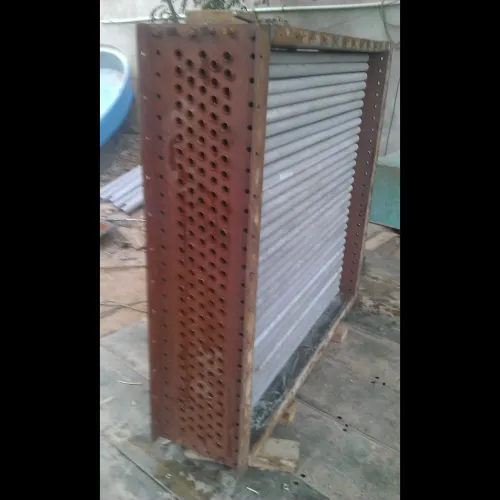
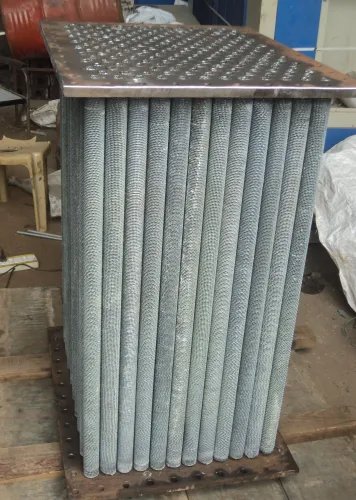
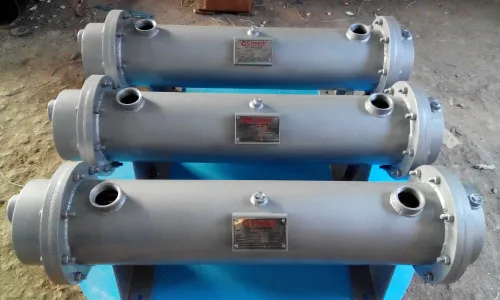
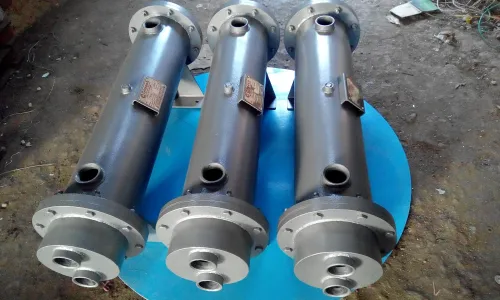
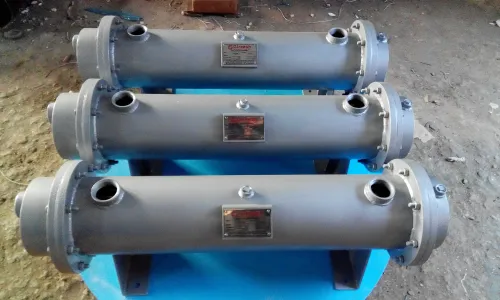
How Fin Tube Heat Exchanger works?In standard shell and tube exchangers, heat transfer is often limited by the fluid with the lowest heat transfer coefficient (usually air or gas). Fin tube heat exchangers solve this bottleneck by routing the liquid through the inside of the tubes while forcing the air or gas across the exterior finned surfaces. The heat from the internal fluid conducts through the tube wall and rapidly spreads across the fins. Because the fins vastly increase the contact area with the passing gas, the system transfers significantly more thermal energy in a shorter period.Read updateJul 16th, 2026 4:30 PM
What is a fin tube heat exchanger?A fin tube heat exchanger is a specialized device designed to transfer heat efficiently between two fluids, typically a liquid and a gas. By adding extended surfaces—or fins—to the outside of standard tubing, these exchangers dramatically increase the total surface area without occupying more physical space. This architectural modification maximizes heat transfer efficiency when dealing with gases, which naturally have low thermal conductivity.Read updateJul 16th, 2026 2:30 PM
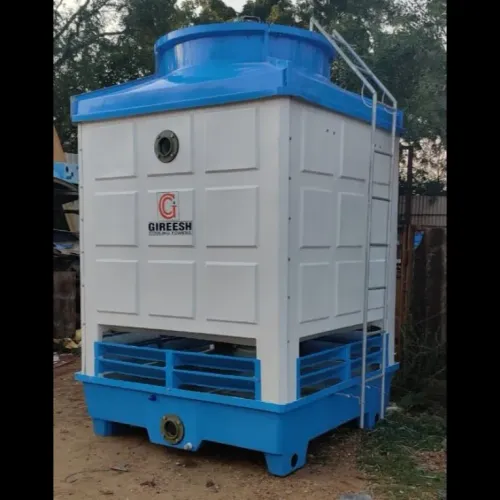
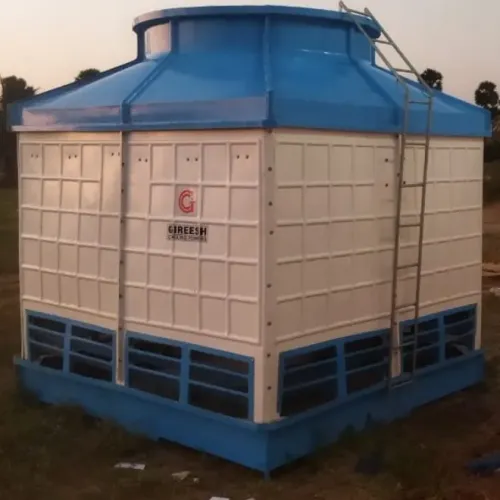
Applications & Industries ServedOur square FRP cooling towers are engineered to support demanding thermal loads across various sectors: (1) HVAC Systems: Commercial buildings, malls, and data centres. (2) Manufacturing: Plastic injection moulding, die casting, and machine cooling. (3) Process Industries: Chemical plants, pharmaceutical labs, and food processing. (4) Power & Metallurgy: Small power plants, furnaces, and induction heating.Read updateJul 15th, 2026 5:00 PM
Why Choose a Square Design Over Round Towers?While traditional round towers are common, square cooling towers offer distinct structural and operational advantages for modern industrial layouts: (1) Zero Wasted Space: Square configurations fit perfectly into corners and tight layouts. (2) Modular Multi-Cell Setup: Easily cluster multiple square units together as your capacity grows. (3) Uniform Air Distribution: Parallel airflow ensures even cooling across the entire internal fill media. (4) Simplified Piping: Straight-line layouts reduce plumbing complexity and installation costs.Read updateJul 15th, 2026 2:00 PM
Engineered for Power. Shaped for Efficiency.Discover the ultimate industrial cooling solution with our Square FRP Cooling Towers. Combining space-saving geometry with high-grade, corrosion-resistant materials, these towers deliver maximum thermal performance in the tightest footprints.Read updateJul 15th, 2026 11:34 AM
Crucial Industrial Applications1. Oil & Gas Refining: Refineries operate under brutal conditions. Shell and tube exchangers are used as crude oil preheaters to capture waste heat, and as column reboilers to vaporize heavy hydrocarbons during distillation. 2. Power Generation Plants: Whether coal, natural gas, or nuclear, power plants rely on steam surface condensers. These massive exchangers turn low-pressure turbine exhaust steam back into pure water, closing the thermodynamic loop. 3. Chemical & Petrochemical Processing: Chemical reactions generate volatile temperatures. These systems regulate reactor temperatures and…Read updateJul 14th, 2026 5:00 PM
Why do engineers repeatedly choose shell and tube systems over plate or spiral heat exchangers?Extreme Pressure & Temperature Tolerance: They easily manage pressures exceeding 300 bar and temperatures well above 500°C. Unmatched Serviceability: Tube bundles can be completely pulled out for mechanical cleaning, inspection, and high-pressure washing. Easy Leak Isolation: If an internal tube fails or leaks, it can be quickly plugged to resume operations, preventing costly unplanned shutdowns. Customisable Alloys: They can be fabricated from a vast range of materials specifically chosen to fight your fluid's specific corrosion profile.Read updateJul 14th, 2026 1:00 PM
What is a Shell and Tube Heat Exchanger?At its core, the design is brilliantly simple. It consists of a large outer vessel (the shell) containing a bundle of smaller tubes inside. One fluid flows through the tubes, while a second fluid flows over those tubes through the shell. Heat is continuously transferred through the tube walls without the two fluids ever touching or mixing.Read updateJul 14th, 2026 9:53 AM
Why Choose Gireesh's Treated Industrial Timber Cooling TowerUnmatched Cost Efficiency: Significantly lower upfront capital cost compared to FRP or concrete for large-scale, multi-cell setups. Vibration Dampening: The natural elasticity of heavy timber absorbs structural stress and harmonic vibrations from massive axial fans. Easy On-Site Repairs: Standardized timber components can be quickly replaced or repaired by local crews without waiting for proprietary factory parts.Read updateJul 13th, 2026 3:00 PM
Gireesh Cooling Towers - Supplier of Treated Industrial Timber Cooling TowerFrame Material: Pressure-treated Douglas Fir, Scotch Pine, or Redwood. Chemical Treatment: ACQ / CCA vacuum-infused to prevent rot, fungi, and insect attack. Flow Configurations: Available in Cross-Flow (gravity-fed) or Counter-Flow (spray nozzle) models. Capacity Range: Scalable modular design starting from 100 TR to over 5, 000 TR per cell. Fasteners & Hardware: Marine-grade 304/316 Stainless Steel or Hot-Dip Galvanised Steel. Water Compatibility: High tolerance for heavily polluted water, high TDS, and aggressive chemicals.Read updateJul 13th, 2026 12:01 PM